Farmer–Scientist Interaction Programme on Khet Bachao Abhiyan, Crop Residue Management, Crop management in Rabi Season, Field Day on Rice Crop and Cyber Security Awareness
29 October 2026
A Farmer–Scientist Interaction Programme focusing on Khet Bachao Abhiyan, crop management for the upcoming Rabi season, crop residue management, field-level experiences in rice cultivation and cyber security awareness was successfully organised on 29 October 2026 at Padariya village, Kundam Block, Jabalpur district, Madhya Pradesh, under the Farmer FIRST Programme. The programme witnessed active participation of 47 farmers, including 29 Mahila Kisans. The programme commenced with a deliberation on Khet Bachao Abhiyan by Dr. Deepak Pawar, Co-PI of the project. He highlighted the increasing climatic variability, particularly the erratic behaviour of the monsoon, and its potential implications for crop production during the forthcoming Rabi, Zaid and Kharif seasons. He emphasised the need for timely and location-specific interventions to safeguard agricultural fields, conserve soil and water resources, and minimise climate-related production risks.
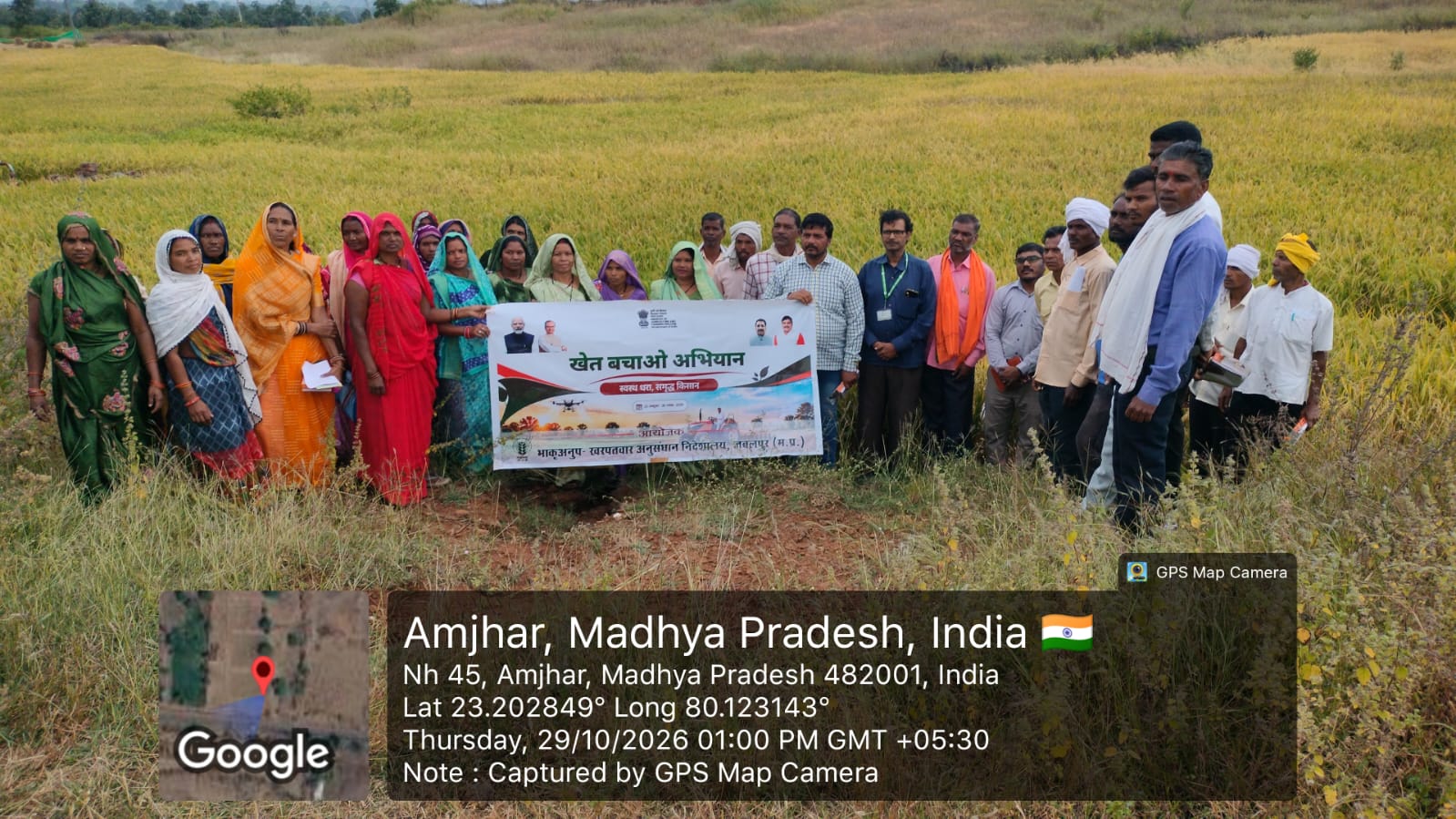
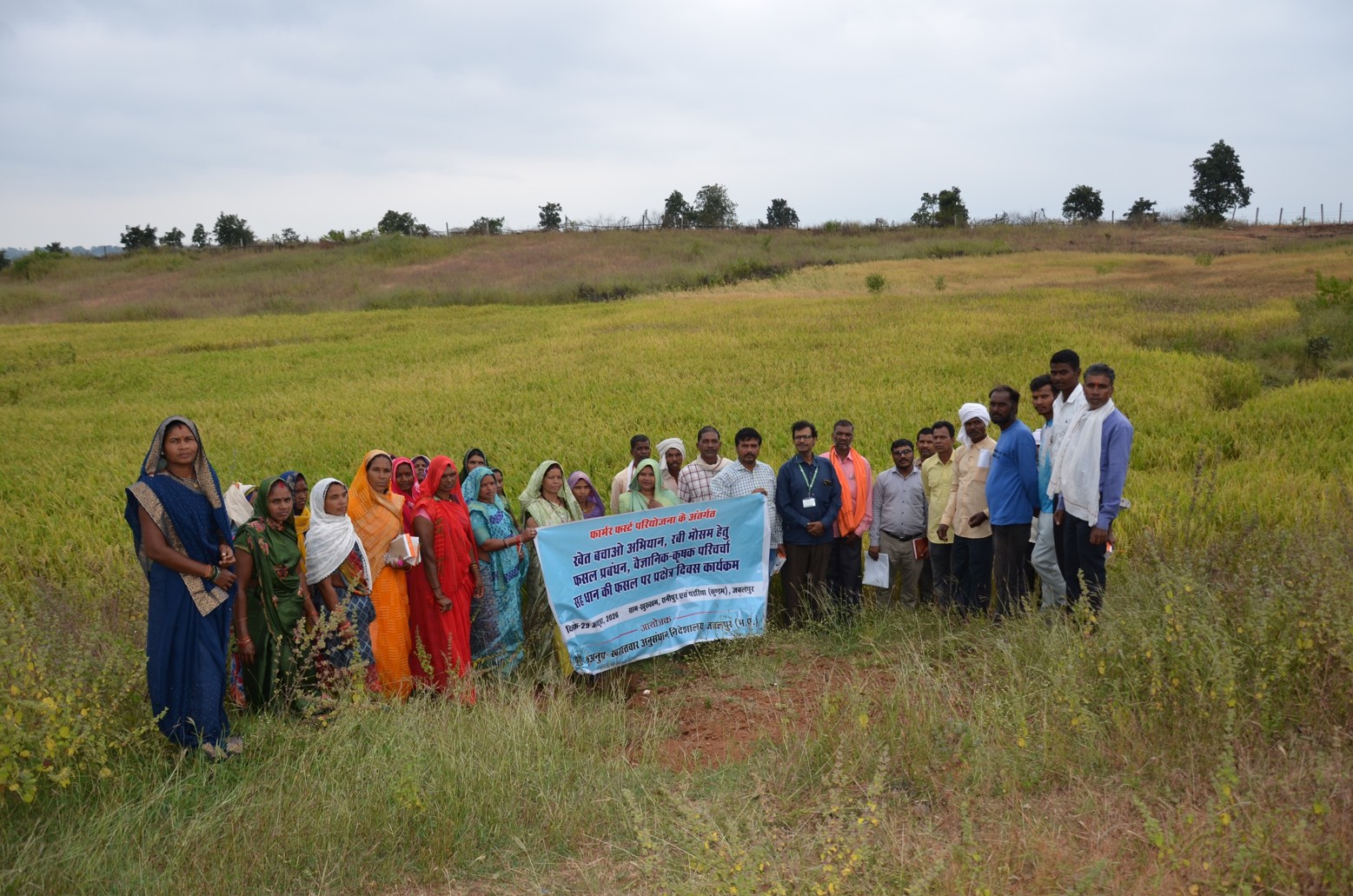
Dr. P. K. Mukherjee, PI of the project elaborated on the El Niño phenomenon and its possible implications for Indian agriculture, particularly the Rabi season. He explained the role of increasing sea surface temperatures in the Pacific Ocean, which may reach around 30°C, in influencing atmospheric circulation and seasonal weather patterns. He also discussed the possibility of warmer winter conditions and their implications for crop growth and productivity. Both Dr. Pawar and Dr. Mukherjee highlighted practical strategies under Khet Bachao Abhiyan, including conservation of soil moisture through timely field preparation, in-situ rainwater harvesting, field bunding and drainage management, adoption of climate-resilient and short-duration crop varieties, timely sowing, crop diversification, balanced nutrient management, and integrated weed and pest management. Farmers were also encouraged to adopt contingency crop planning based on prevailing weather conditions and available soil moisture. A special discussion was held on crop residue management, particularly the prevention of residue burning. Farmers shared their experiences and discussed practical approaches for converting crop residues into organic compost for recycling nutrients, improving soil health and reducing environmental pollution. The importance of on-farm residue management and efficient utilisation of available biomass was also emphasised.
![]()
![]()
An awareness session on cyber security was conducted by Dr. P. K. Mukherjee, who sensitised farmers about different forms of cyber fraud, including fraudulent phone calls, suspicious links, OTP-related scams, fake agricultural schemes and digital payment frauds. He advised farmers not to share OTPs, PINs or banking credentials with unknown persons, avoid clicking suspicious links, verify the authenticity of online communications and immediately report suspected financial fraud through appropriate cybercrime reporting channels. A field-level interaction was also organised during which farmers shared their experiences regarding the impact of erratic monsoon behaviour on rice productivity and discussed weed management challenges in direct-seeded rice (DSR) and puddled transplanted rice (PTR). Particular concern was expressed about the increasing incidence of weedy rice in DSR, and the need for timely identification and integrated management strategies was highlighted. Crop management practices for the upcoming Rabi season were also discussed. Farmers particularly requested the supply of high-yielding wheat varieties that had performed well during the previous season, identifying quality seed as a critical input for improving productivity. The programme provided an effective platform for farmer–scientist interaction, knowledge sharing and identification of field-level challenges. The active participation of the farmers reflected their keen interest in climate-resilient agriculture, sustainable crop production and improved farm management practices. The programme concluded with a vote of thanks proposed by Mr. Ramchader Marabi, Lead Farmer.
|